
Stop scrolling: verify the claim before you share it
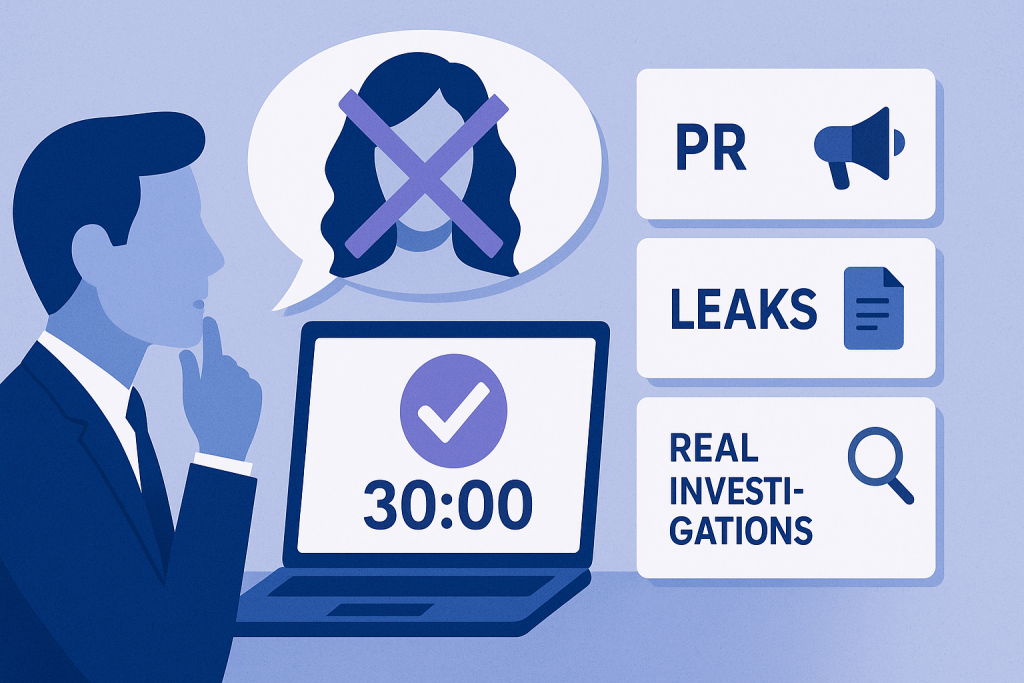
When a celebrity rumor hits your feed, the fastest way to reduce misinfo detection mistakes is to treat it like a small evidence problem. In 30 minutes, you can usually determine whether you’re looking at PR vs leaks, a misunderstanding, or something that has real reporting behind it.
This is celebrity rumor verification for normal people: no insider access, no guesswork-just a repeatable workflow built around source triangulation, timeline reconstruction, and checking whether the people involved had a right of reply.
The 30-minute workflow (with what to do in each block)
Set a timer. You’re not trying to “solve the case.” You’re trying to answer one question: Is this claim supported by credible outlets and official statements, or is it mostly PR, leaks, and speculation?
0-5 minutes: capture the exact claim (and what would disprove it)
Copy the rumor text (or screenshot it) and write down:
- Who is being claimed about (name + role: actor, singer, director).
- What is alleged (e.g., “contract canceled,” “relationship ended,” “health issue,” “lawsuit filed”).
- When it supposedly happened (a date, a “recently,” or “months ago”).
- Where it came from (a post, a video, an anonymous account, a “leak,” a tabloid headline).
Then write one disproof point. Example: if the rumor says “X was fired,” the disproof is “an official statement or credible reporting shows the employment status is different.” This keeps you from chasing unrelated details.
5-15 minutes: classify the rumor-PR, leak, or investigation
Use these practical signals. None are perfect alone, but together they’re powerful.
PR vs leaks: what to look for
- PR signals: the claim is vague but emotionally framed (“sources say,” “fans are noticing”), or it aligns with a current release cycle, event, or promotional moment. You may see consistent wording across multiple accounts that look coordinated.
- Leak signals: the claim relies on anonymity (“insider,” “someone close”), includes partial details, and often lacks verifiable documents. Leaks can be true, but they’re harder to confirm without corroboration.
- Investigation signals: the story includes specific, checkable elements (named documents, on-record statements, multiple credible outlets reporting the same core facts, or clear evidence trails).
If you can’t tell which bucket it fits, that’s a result: treat it as unverified until you find stronger support.
Check for official statements and right of reply
Look for official statements from the person’s agency, management, or verified social accounts, or for a response quoted by credible outlets. If there’s no attempt at a response, be more cautious-especially for serious allegations.
When you find a denial or clarification, compare it to the rumor’s exact wording. Sometimes the “rumor” is only a misquote or a stretched interpretation of something else.
15-25 minutes: source triangulation (the part that usually decides it)
Open at least 2-3 separate sources and compare them on the same checklist:
- Do they agree on the core claim? (Not the extra drama-what exactly is alleged.)
- Do they cite evidence? Look for named reporting, documents, or direct quotes.
- Do they use the same timeline? If one outlet says “last week” and another says “months ago,” that’s a red flag.
- Are they independent? If multiple articles clearly copy the same original post or the same single anonymous “source,” you don’t have triangulation-you have amplification.
If you only find one credible outlet and everything else traces back to the same original post, treat it as unconfirmed.
25-30 minutes: timeline reconstruction + reverse search
Do a quick timeline reconstruction using what you already collected:
- List each event mentioned in order (posting time, alleged incident, follow-up statements).
- Mark where the timeline becomes fuzzy (“around,” “reportedly,” “sources say”).
- Check whether later updates contradict earlier details.
Then use reverse search when the rumor includes images or clips:
- Reverse-search the thumbnail or key frame to see if it appeared in earlier contexts.
- Look for re-uploads with different captions (a common sign of misinfo).
- If the clip is real but old, the rumor may be a timing manipulation rather than a false event.
This step is especially useful for celebrity rumor verification involving “new” footage, “leaked” screenshots, or edited videos.
How to judge PR vs leaks vs real investigations (a quick decision rule)
After 30 minutes, you should be able to place the rumor into one of three practical outcomes:
- Likely PR: the claim is vague, emotionally framed, and spreads with similar phrasing; official statements are absent or the story is tied to a promotional moment.
- Possible leak: details are partial and anonymous; you may find one outlet repeating the same “insider” line without evidence.
- More credible investigation: multiple credible outlets converge on the same core facts, and you can see an evidence trail or right of reply from the involved parties.
If you land in “possible leak,” you don’t need to “debunk.” You just need to avoid treating it as fact.
Common failure modes (and how to avoid them)
Confusing “more coverage” with “more evidence”
Rumors often spread because they’re entertaining, not because they’re verified. If every new post cites the same original source, you’re watching amplification.
Chasing net-worth or income claims without checking the math
Money-curious browsers often encounter viral claims about a celebrity’s earnings or lifestyle. Before you believe a number, compare the claim to what’s publicly supportable (assets, known work, and documented deals). If you’re evaluating income plausibility, use a framework like net worth vs lifestyle: how to judge whether a celebrity’s reported income fits their public assets.
Assuming a denial means “nothing happened”
Sometimes official statements address one part of a rumor but not the entire story. Always compare the denial to the exact allegation you wrote down at the start.
Ignoring context for AI-edited or synthetic media
When a rumor includes a “perfect” voice, unnatural pacing, or suspicious trailer-like material, you may be dealing with misinfo detection challenges. If the claim involves video or audio, use a checklist approach like how to detect AI-generated movie trailers and treat the clip as unverified until you confirm provenance.
Mini checklists you can reuse for any fandom
For relationship, contract, or career rumors
- Is there an official statement or on-record quote?
- Do credible outlets agree on the timeline?
- Does the rumor rely on anonymous “sources” only?
- Is there a clear right of reply?
For “leaked” documents or screenshots
- Can you find independent confirmation?
- Do multiple sources describe the same document details?
- Does reverse search show the image is older or reused?
- Are there inconsistencies in dates, names, or formatting?
For health or safety allegations
Be extra strict: prioritize official statements and credible reporting. If you can’t find a right of reply or reliable evidence, treat it as unverified and avoid sharing it as fact.
FAQ
What if the rumor is posted by a verified account?
A verified account can still share unverified information. Verification helps with identity, not truth. Use the same source triangulation and timeline reconstruction steps.
How many sources are enough?
Two independent credible sources that agree on the core claim is a stronger baseline than ten posts that all trace back to one original leak.
Should I debunk rumors publicly?
If you share corrections, stick to what you can support: the exact claim, what evidence contradicts it, and the presence or absence of official statements or right of reply.
Can a leak be true?
Yes. The workflow doesn’t assume leaks are false; it just ranks confidence based on evidence quality and corroboration.
Actionable takeaway for your next rumor
Before you repost anything, spend 30 minutes doing three things: capture the exact claim, classify it as PR vs leaks vs investigation, then run source triangulation with a quick timeline reconstruction and reverse search. That’s how you reduce misinfo detection errors without killing your fandom fun.